Tide Tables and Top-outs: Planning a Sea Cliff Climb Around the Ocean
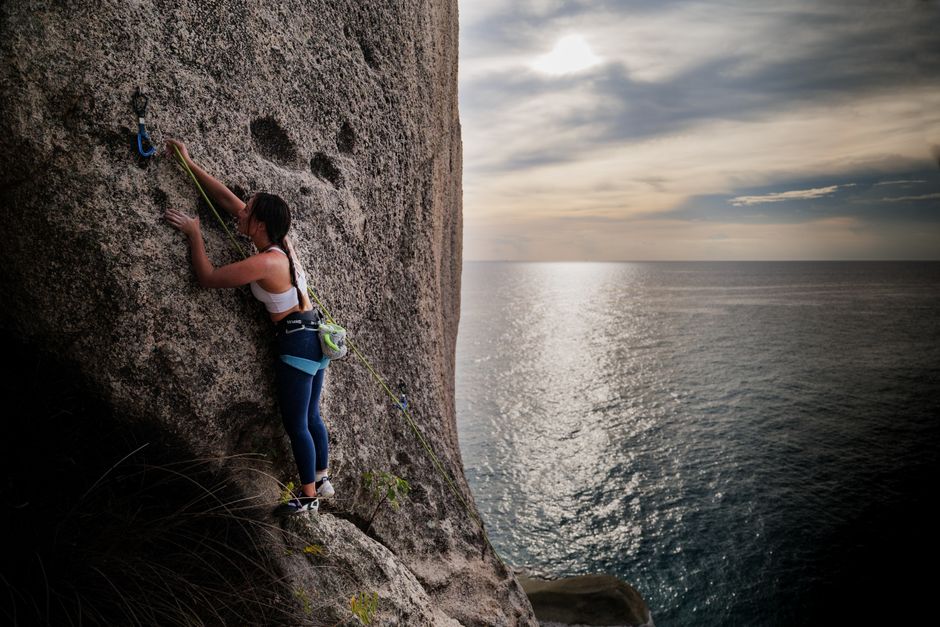
There is a particular kind of climbing that only exists where rock meets saltwater. The holds are sharper, the rock is often steeper than it looks from the beach, and the entire day is dictated by something you cannot negotiate with: the tide. Before I ever tie into a rope on a sea cliff, I spend more time with tide tables and swell forecasts than I do with the guidebook. The climbing is the reward; the planning is the price of admission.
The first thing to understand is that tides are not just about water level. A low tide at 6 a.m. is a completely different proposition than a low tide at 6 p.m., because wind and swell build through the day. A one-metre swell on a calm morning can be a manageable splash at the base of the route. The same swell combined with an afternoon onshore wind can turn that base into a washing machine that soaks your rope and knocks you off balance on the approach. I check three things every time: the tide height and timing, the swell period and direction, and the wind forecast for the exact hours I plan to be on the rock.
Reading the Water Before You Read the Rock
When you arrive at the cliff, do not rack up immediately. Stand at the base and watch for at least fifteen minutes. Count the sets. Watch where the biggest waves reach and how far the water retreats between them. That retreat is your window. On many coastal routes, the crux is not a hard move but a wet section of rock that sits in the spray zone. If that section is streaming with water, no amount of chalk or determination will help you. I have walked away from routes I drove hours to climb because the sea was sending spray higher than my third bolt. That decision always felt disappointing in the moment and correct by dinner.
Guidebooks for coastal areas often describe an ideal tide window, but they were written by people with different tolerance for risk and different conditions on the day. Treat those windows as a starting point, not a guarantee. A route described as "climbable at low tide" might still be soaked if a long-period swell is running. Conversely, a route that looks impossible from the car park can dry out completely on a falling tide with offshore winds.
Building a Tide-Aware Climbing Day
Structure your day around the water, not around your ambition. If low tide is at noon, plan to be at the base an hour before and off the route within an hour after. That gives you a sane window without racing. Bring a watch you can read from a hanging belay, and set an alarm for your turnaround time. It is easy to lose track of the ocean when you are focused on a sequence, and the water does not announce its return politely.
For the approach and descent, know your escape routes. Many sea cliff climbs have a scramble down that is only passable at low tide, or a gully that becomes a waterfall when the swell picks up. Scout the descent before you climb if you can. If the only way off the route is to rappel into a zawn that fills with water, you need to be certain about the tide state and your rope length. I keep a short length of static line and a few extra slings on coastal days specifically for improvised anchors and tide-safe retreats.
Finally, respect the rock itself. Sea cliffs are often softer than inland crags, and salt spray leaves a residue that makes some holds feel greasy. Brush and chalk help, but the real skill is reading which holds are trustworthy. If a hold looks like it might pull off, it probably will. Climb gently, place gear thoughtfully, and remember that the ocean has been shaping this rock for a very long time. You are just borrowing it for an afternoon.